Welcome to my blog!

We find ourselves in challenging times. To meet them more easily, I believe involves challenging ourselves to move beyond old, established habits and patterns.

Perhaps I am a bit late fully entering into the 21st century by starting my blog now, in 2010! In that my work and message has so much to do with slowing down and settling into a deeper knowing beyond and prior to our cultural modes, it may be appropriate to step extra slowly into the world of blogging and other cyber realities.

I suspect that, if you are drawn to my blog and the words here, you may also value this slower, deeper state we are all capable of. I invite you to read on and regularly, and hope the words below can support you in enhancing your ability to be, even in the midst of all the doing required in our modern world.

Sunday, 7 October 2012

Consciously Engaging the Relational Field


I recently read an interesting blog article about the importance of nonverbal communication within the therapeutic relationship, and how it contributes (or not) to rapport between therapist and client. Click here to read the article and view its demonstrative video clip.

As I read the article, I was reminded of what we call “the relational field” in Biodynamic Craniosacral Therapy. In this work, we begin by supporting a settling of the relational field, meaning that the client is able to feel safe enough to begin to relax, and that client and practitioner deepen into a sense of resonance. We may sense this as a calming, a sense of dropping or quieting between us. We acknowledge that we are coming together as two human beings, not just physical bodies or physiological systems.

As we feel safe, our autonomic nervous systems can begin to settle. We can begin to shift from a sympathetic fight-flight drive state into more balance, where our parasympathetic rest and rejuvenation system can come more online. Our social engagement system is also activated as we begin to resonate with each other, meeting as two human beings.

Once this settling has happened, then the client’s system can begin to settle under its patterns and habits into what we call the holistic shift. Here, the deeper, more inherent forces of primary respiration come to the fore, often like the sun coming out from behind the clouds, and the inherent treatment plan can then emerge.

If the relational field does not settle, the deeper forces are not as easily accessed. We remain in the territory of reactive, historically based activation. Therefore, settling of the relational field is an essential first step in this work. It begins with our first client-practitioner interaction, as we sense each other out through our words and voices, as well as the exchange of more obvious information about the practitioner’s background, experience and approach, and the client’s issues and intentions.

How we support the relational field is a basic, first skill in Biodynamic Craniosacral Therapy. Looking at our nonverbal interactions can greatly enhance this skill. In my training as a somatic psychotherapist and dance/movement therapist, I was taught at length to attend to nonverbal gestures and bodily expression. While Biodynamic practitioners are craniosacral therapists, rather than psychotherapists, our awareness of nonverbal communication can be extremely helpful in settling the relational field. I am reminded here of the research in infant-parent nonverbal communication and how the practitioner-client relationship may serve to reinforce or, hopefully, resolve early relational trauma.


Learning from Little Ones
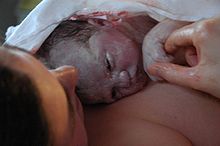
Little ones come into the world with their social engagement system online. They are ready to engage. Their first impulse is to gaze into mom’s eyes and breastfeed. Often, their interest in mom’s face exceeds their attraction to the breast for some time. As they look into mom’s eyes, both fall in love, and the bonding required for survival and thriving of the pair deepens. The oxytocin (the love hormone) accompanying breastfeeding serves to reinforce the positive feelings between the two.

As babies develop, their brains depend on continued attuned interaction with mom, or their primary caregiver. Deprived of this interaction, brain development is thwarted, contributing to later issues with behavior, learning and health. Babies thrive within a field of “good enough” mothering, where their primary caregiver is generally aware of their needs and communications and responds accordingly. Missing the odd time is not a problem, and may actually support the baby in preparing for a world that is not so attuned. If the baby is not usually responded to with empathy and care, development is affected, as the relational field it requires is not safe and reliable. The self structure that develops within such a field, is particularly defended, as the child grows with an unspoken, neurological expectation of not being met and adequately cared for.

What is an attuned relational field between mother and infant like? This is an important question for us as practitioners, because it resembles an attuned relationship between us and our clients.

The influential work of Alan Schore and, earlier, Daniel Stern, have pointed to the importance of mother-infant interactions and attunement for the child’s development of self-regulation. Daniel Stern, author of The Interpersonal World of the Infant, studied films of mother-infant interactions and noted how attuned they could be. They move in similar rhythms, with related pauses, tones, inflections, pacing and gestures. When they are attuned in this way, with the child’s need for time to integrate being respected, nervous system arousal is regulated by the exchange. The infant looks away when stimulation begins to become too much to process. The mother or caregiver who responds to this signal by respectfully quieting with the infant, supports not only their bond, but also the child’s ability to regulate emotional arousal. Babies also suffer with under-stimulation, as can occur with depressed mothers who don’t have the energy to respond or notice their infants’ cues, or with little ones neglected in overcrowded orphanages. Misattunement in these early relationships can contribute to difficulty with self-regulation and relationships throughout life.

This is common knowledge in attachment studies and therapies. It is also now common to look at therapeutic relationships as an opportunity to heal this kind of early relational wounding. How does this relate to Biodynamics and our relational field?


Cultivating Attunement in Biodynamics
In Biodynamics, we carefully negotiate our contact as well as the energetic space between practitioner and client. We are sensitive, like the attuned mother, to the needs of the client. We practise grounding and deepening under our own personal histories in order to provide a relatively neutral, reflective holding field for the client. If our own personal material is stimulated via our relationship with a client, we are committed to working with this material through our own professional supervision or therapy, and refer as necessary.

The attuned interaction between mother and infant, like ours with the client, occurs on many different levels. The mother speaks in certain ways to her infant, her tone and rhythm meeting those of her infant. Her attention to non-verbal cues prevents under or over-stimulation. Her words and voice, however, are accompanied by bodily movements, gestures and facial expressions. The infant plays and communicates non-verbally, although often making sounds.

I believe it is helpful for us as Biodynamic practitioners to be aware of how we also interact with our clients on many levels. These include not only physical contact through our hands, but also somatic communication such as body movements, physical distance between us, tone of voice and our actual words.

I have noticed that, for some clients, talking during a session is essential to help them to settle enough for the holistic shift to occur and the inherent treatment plan to present. As they talk, their nervous system begins to settle and, gradually, they seem to feel safe enough within our relational field, that they can become quieter.

Other clients talk habitually to maintain a familiar high level of nervous system activation. They are afraid to settle, but can gradually feel safer if I meet their energetic with similar energy. If I judge their activation or try to get rid of it, they either become more activated or withdraw into a dissociative freeze state. If I can meet their energy but, like the attuned mother, sense when their system needs to have more space and withdraw, they begin to feel safe enough to stay present. Then, the holistic shift occurs and the inherent treatment plan can emerge.

Every client presents with different needs, history and intentions. The more aware we as practitioners can be of the various levels at which we interact, the more potential we have of meeting their relational needs within the context of the Biodynamic treatment. The resulting settling can have dramatic effects. As Stern writes: “Joy is the product of a mutual regulation of social exchange by both partners.” And what can be more healing for relational wounding than the experience of relational joy?

Monday, 6 August 2012

Leaning Out For Love


“There are children in the morning
They are leaning out for love
And they will lean that way forever”
                        -Leonard Cohen

There is nothing quite like driving through the countryside accompanied by Leonard Cohen. Leonard sang to us yesterday and I heard these words from his song, Suzanne, as if for the first time.

“There are children in the morning
They are leaning out for love
And they will lean that way forever”

Children do that. And they do truly do that forever.

We begin leaning out for love as we start our human journey. From at least conception on, our journey is about love, giving it, receiving it, being it, sharing it, returning to it. As the Beatles pointed out, “All you need is love.”

Little Ones Forming in Love
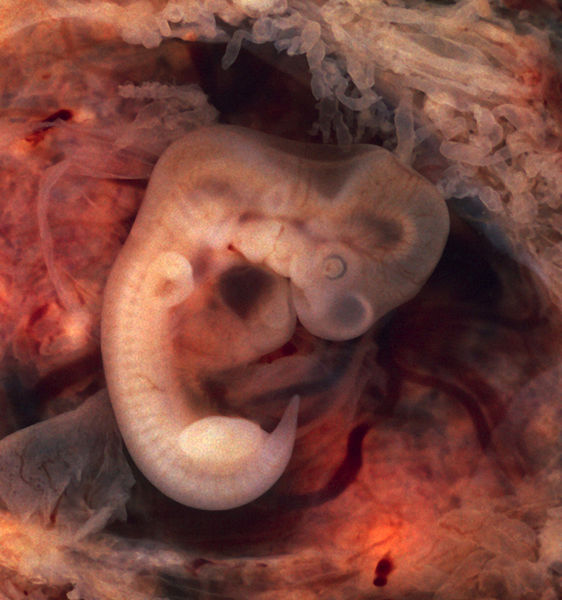
As little ones, we are love. Our hearts, the first organ to come online, start beating four weeks after conception. At that point, there is not much else to our tiny bodies. We are mostly heart. A huge heart bulge protrudes from our midline. We have a neural tube forming a brain and a gut tube that will form our digestive system, but we are mostly heart.

Our hearts, however, like all parts of our bodies, form in relation to context. The scientific belief in the primacy of genes has been falling lately to the newer epigenetic understanding that our genes do not determine our form but rather respond to determinants around us. These include both maternal states and the bio-electric field that precedes the shaping of our physical body.

If mom experiences ongoing or particularly intense stress prenatally, the little one intelligently prepares to live in a stressful world. Genes turn on or off in response to the environment. The nervous system develops accordingly, with hyper-sensitivity towards stress.

How do we lean out for love in stress?

What happens to our leaning when mom is too concerned about her own safety to settle in with her little one?

Children do lean out for love forever. They may or may not be met there.

Psychoanalyst, Ronald Fairbairn noted that little ones’ greatest need is not actually to be loved but to have their love received. We come in as loving beings, needing to be in love. Just to be. Just to be received. But what are we received by? How are we received?

While many parents truly love and welcome their new baby, children are conceived within a field of many intentions, often not relating to what the child most needs. Parents may have hopes, conscious or unconscious, that a baby will resolve marital tension. Little ones may be seen as replacing an older sibling who has died, rather than for themselves. A baby may be wanted as an anti-dote to existential despair, to provide a sense of purpose, to prove manhood or womanhood, to prolong the family name, to become the next doctor in the family, to be the first to go to college, etc. etc. How often are little ones welcomed and received simply as the loving beings they are, as themselves?

Even if the parents truly want to parent a new being, the news of pregnancy may be shocking or unexpected, and take some time to adjust to. Parents often don’t feel ready when they discover the pregnancy. They may also find their own prenatal and birth histories coming to the fore, flooding them with fear, doubt or insecurity, often without awareness of its source. This is an important time for parents to do their own work on themselves, with the support of a therapist experienced with prenatal and birth therapy, so as to clear the field for the little one arriving.


In the Shadow of Our Ancestors
Since moving to England, I have been more aware then ever of ancestral influences in our formation. It seems that almost everyone I encounter speaks at some point of the traumas experienced in war by their parents, grandparents or even great-grandparents. So often these traumas are passed down through the generations. Again, much of this inter-generational communication used to be seen as genetic. We understand now that we grow within fields. We are fields within fields. Our parents, their parents, and other ancestors contribute to the context our cells respond to.

“In our every deliberation, we must consider the impact of our decisions on the next seven generations.”

This is an expression of wisdom from the law of the Iroquois nation, although I have heard other indigenous peoples in America refer to this responsibility.

It is helpful to remember that, no matter what we do and how we are, the children are still reaching out for love. It is our responsibility to meet that.

We want to meet that in our own children as parents, but there are other children reaching out for love. We are all interconnected. We are all part of a larger web. We all share this planet and our bio-electric fields overlap. There are children everywhere. There are even little ones within us, the little ones we once were, who leaned out for love back then and are still leaning. How can we meet those children?

Tender Leaning
Our intention will take us a long way. Awareness of our own histories and the histories of our ancestors still affecting us can take us further. It may help to understand that pregnancy is often discovered about four weeks after conception. Recently, technology has made it possible to confirm a pregnancy much earlier, but this is still a time when women have missed a menstrual period and are likely to suspect they are pregnant. It is also the time when the little one’s heart is forming and beginning to beat. How discovery of our existence at that time is received can have a profound effect on how we lean out for love throughout our lives.

Wounding from the time of discovery of the pregnancy tends to be expressed in our bodies in around the heart region. We may hide or protect our hearts by caving in at the chest. Or we may attempt to be strong and push our chests out, like soldiers impermeable to the hurts that are actually deep within. Whatever our wounds and tendencies, the little ones within us, as well as the children around us, can benefit from us learning to meet their leaning.

We can learn to love where love has been squashed. We can learn to trust where trust has been deceived. We can learn to be in present time, where we are safe, and to share our knowing of safety with the little one within. If our mothers could not offer this to us, it is time for us to offer it to ourselves. Then, as the children lean, they will be met.


Friday, 29 June 2012

Living From The Heart


“Mr. Duffy lived a short distance from his body.”
- James Joyce, Dubliners

Your heart began beating when you were a little embryo inside your mother, just four weeks after you were conceived. It continues even as you read these pages, and will continue for the rest of your life. The heart is obviously a master at commitment! Is it any wonder that it draws us into and assists us in staying in our relationships?

Throughout our lives, our hearts guide us and inspire us. When we listen to our hearts, we deepen into the love that is our essence. When we deny our heart intelligence, we suffer.

We live in a culture dominated by left brain intellectual thinking, analysis and judgment. Too often, our hearts and their wide, holistic perception are left behind to gather cobwebs and unresolved emotional pain.

Our hearts are sensitive. We have more nerve cells from heart to brain than vice versa. Our hearts provide important information for survival. And for humans, survival means relationship.

Social Beings
Have you ever wondered at the intricacy of human interaction and how apparently simple, innocent little infants can learn to communicate with complex language and develop the multitude of skills required to function within society? Things you probably do every day, like walking, driving, dressing, brushing your teeth, buying groceries and having conversations all require an immense amount of learning.

Intelligence used to be measured by how well and fast a person could answer questions involving language, math and other mental skills. In recent years, other areas of intelligence have been revealed as being at least as important in life. These include our emotional and social intelligence.

We now know that little ones learn through relationship. Our brains develop through interactions with primary caregivers. At birth, we are hard wired for relationship. Newborns are designed to be with mom. Little ones recognize and prefer their mother’s smell and face immediately after birth. Their eyes focus well at the exact distance between the mother’s breast and face. They are designed to be there, resting on her heart, her breast available to suck on, her face available to gaze at.

According to Joseph Chilton Pearce, the stress hormones required for the arduous passage of birth, continue until the baby senses mom’s heartbeat. Then, the little one knows the birth is complete and it is time to rest. This heart to heart communication is essential to health and survival from the very beginning. Without it, the baby’s system continues to be on sympathetic drive. If mom is not available, or if she is stressed, baby cannot settle, and bonding is impaired.

Babies feel safe and can relax and grow when they have the social contact they need. Premature babies gain weight faster and are generally healthier and discharged from hospital sooner when they have skin to skin contact, being held close to their parents in what is called “kangaroo care.” Babies deprived of loving contact do not thrive and may even die.

We are designed to be social beings, and our hearts are integral to this interactive state. In the early 90s, Stephen Porges introduced Polyvagal Theory with its associated concept of the social engagement system, or social nervous system, as an essential aspect of our autonomic functioning enabling us to survive, as well as to thrive.

We used to divide the autonomic nervous system into two parts, the sympathetic (mobilization/fight-flight) nervous system and the parasympathetic (rest and rejuvenation or immobilization/freeze/play dead) nervous system. Porges pointed out that, in case of threat, humans do not immediately react with fight-flight or freeze. We first seek to make contact with others. We look to see how others assess the situation to help determine if we are safe. This communication involves a more recently evolved heart-face neural connection, including part of the vagus nerve.

Having relatively small, weak bodies compared to other animals, our survival often depends on our ability to interact and cooperate as groups. While a tiger can easily overtake and devour one of us, a group can scare it away or even attack it with the tools or weapons we have created together. We can also hide in the shelter we have constructed through group process. I may not be able to build a house on my own, but my kin can come together to do this easily. A baby cannot hide or fight or flee alone, but can be carried to safety by an adult.

Babies, like others, respond to threat first with the social engagement system. They look for mom, and cry to communicate their distress and need for her. If mom does not come or their needs are not addressed, their cry changes. It begins to have an angry tone, as sympathetic nervous system is activated. Circulation is diverted away from the non-essential organs toward the large muscles needed for fight or flight. The heart speeds up to meet this effort. Ironically, however, babies cannot fight or flee. If this sympathetic surge doesn’t get their needs met, they eventually retreat into a parasympathetic freeze mode, although the sympathetic impulse remains beneath the ice. These frozen “good” babies are often very quiet and undemanding. No one notices that they are undemanding because they are not really present. They have dissociated, like the deer about to be eaten by the tiger.

Dissociation is a kindness provided by nature that reduces the animal’s suffering if it is caught and hurt or eaten by its pursuer. In dissociative states, we do not feel the pain because we are not connected to it. Unfortunately, our connection with others is also muffled in this state. Our hearts may sense another’s love or caring, but we have disconnected from our hearts because they also feel our pain.

Children developing in this dissociated state may live their lives within a protective shell. They protect themselves from feeling hurt, betrayal, grief, rage, or terror and in the process tend to miss out on love. Their relationships reflect and reinforce their fears. They live within a psychic bubble, represented in the physical body by tight, contracted tissues around the heart.

To varying degrees, this dissociated, disconnected state is epidemic in our modern, western world. We live “a short distance from our bodies,” with a wall around our hearts, longing for love, literally dying for real connection. How can we re-embody recover our hearts? How can we come home?

The journey home can be informed by our early beginnings. When we first arrived, when we first were forming, our hearts initiated our embodiment.

Embryo Heart
Until the fourth week after conception, when our hearts fold into our center and begin beating, our embryo body is relatively flat and two-dimensional. As the heart folds in, we have a place to be, a place to embody. This fact is reflected in many spiritual traditions holding that our souls do not fully enter our bodies until the fourth week.

In that the heart actually begins its development and function outside of what will become the body of the embryo, it seems natural that the heart would also specialize in relationship. It knows intimately, from its early beginnings as little blood islands forming in the extra-embryonic mesoderm around the embryo, about connecting within the space between.

Mesoderm is our first inner layer, established early in our embryonic development as our midline is forming within an otherwise apparently undifferentiated clump of cells. Embryologist Jaap Van der Waal points out that this third inner layer forming between the endoderm and ectoderm is misnamed. It is not really a derm, or skin. It is an interior. He therefore prefers to call it “meso.” It is like the filling of a sandwich. Some meso finds its way to the exterior mass of cells around the embryo body that will develop into the placenta and umbilical cord. It is within these extra-embryonic (outside embryo) tissues that the blood first forms.

As we begin to take form, the blood finds its way into the body, flowing up to the top or head end of the tiny embryo, where it pauses and then flows back down. It is here, at the head end, that the heart begins to form. In the fourth week after conception, as the nervous system grows up and around it, the heart folds into the more central location we associate as its proper place. It remains a major fulcrum for development and being for the rest of our lives.

In the little embryo, the face grows directly on the heart. The arms start as little buds on either side of the heart, growing around it, as if already in embrace. Throughout our lives, our faces and arms express our hearts, and connect us with other people.

Recovering the Heart
When we have become disconnected from our hearts, our health also suffers. The research of HeartMath Institute (www.heartmath.org) has revealed that heart coherence, associated with positive emotional states like appreciation, gratitude and love enhance our health and general state of well-being. Negative emotional states, like anger and impatience relate to chaotic heart rhythms and issues with mental and physical health. HeartMath has also demonstrated that we can use our minds to support our hearts. We know also that mindfulness practices support our health and release of stress.

It is simple to begin re-connecting with your heart. You might begin (or return) right now by placing a hand over your heart area and listening. What do you sense there? Can you sense your breath moving the tissues under your hand? Can you feel your heart beating? You may find yourself beginning to feel calmer just by listening this way to your heart.

Our understanding of embryology can also inform our relationship with our hearts. Recent research has shown that, at least in frog embryos, physical formation is generated by shifting patterns in the bio-electric field of the embryo. You can watch this on an amazing film easily accessible on You Tube.

We know that our bodies are bio-electric phenomena. Every cell, organ, and tissue generates an electro-magnetic field via its metabolism. Science is learning, however, what healers have known for centuries, that our bodies are constantly being formed within an energetic field. What is true for the tiny embryo is equally true for you as you read this page. You are not fully and finally formed, any more than the embryo is. You are in formation, dissolving and re-forming in relation to the context you find yourself in each moment.

Cell biologist Bruce Lipton in discussing epigenetics, points out that our genes are not capable of turning themselves on and off. Genes respond to the conditions they meet. They are turned on and off in the womb in large part in response to the mother’s perception of her environment as safe or not. Later in life, they respond to our thoughts and beliefs.

We can affect the context our genes interact with in part through where we orient our minds. Take a moment to check in just now. What are you thinking about? How often do you find yourself complaining about the weather, the news, your finances, your health, your looks, your work, whatever it is you complain about? How often do you take time to appreciate what you have, and practice gratitude? What is one thing you can be thankful for in this moment? How does your heart feel as you orient to appreciation and gratitude? This simple act can shift your heart rhythms and health toward coherence.

From my practices of Biodynamic Craniosacral Therapy and Continuum Movement, I have learned that our thinking, our beliefs, and our bodies seem to shift more easily when we slow down into a relative state of stillness where our old form can dissolve. In speed, we tend to operate on habit. As we deepen into a more fluidic state, we have more options to re-form. We can put ourselves back together as we are accustomed to being, or we can re-construct ourselves within a new and different context.

Within a Biodynamic session, the context includes being held and reflected by a relatively neutral practitioner who is orienting to the original Biodynamic forces that underlie our original embryological formation. While acknowledging the effects of conditional forces, the Biodynamic practitioner holds these old wounds within the wider context of the original blueprint we all on some level seek to return to. This includes the open heart we all long for but also so often fear. How vulnerable are we willing to allow ourselves to be? When openness has at some point in the past become associated with pain, we tend to avoid it. Through resonance with the practitioner intentional state of being, the client’s system can begin to resonate more strongly with its original intent, letting go its hold on fearful trauma patterns.

When old trauma is held within a larger context of health, resource and support, it can melt away in relatively gentle ways. We then have the opportunity to open to our true nature, to whom we are and were prior to the trauma.

In Continuum Movement, we also dissolve and re-form within a different context. This includes our understanding that something else may be possible. We can be supported within the larger energetic field created by our practice within a group. The sounds, breaths and awareness of Continuum, like mindfulness practices, enable us to orient to something deeper than our patterns. As we practice dissolving tissue structures, we enter into a fluid primordial state of being. Like in Biodynamics, we rest in relative stillness, where our history becomes less important. We find ourselves accessing vibrancy and creativity we may not have previously imagined.

Heart to Heart: Being in Resonance
For me, Continuum has been an amazing journey of heart opening. I had practiced and taught various modes of opening and living from the heart for years before coming to Continuum. After living my first twenty or so years from the neck up, I had shifted down in my body and had managed to become much healthier and more embodied.

When I deepened into Continuum practice, I was shocked to discover my sense of my heart dramatically changing. While my heart had seemed to me before this to be a relatively solid mass about the size of my fist in the central area of my chest, it suddenly began to grow and soften. It seemed to extend from my throat down to my pubic bone. Instead of being a clump of emotional pain in my chest, my heart began to sing to me the songs of all I encountered. I began to sense the pain of others across the planet in a bittersweet way. The woman who had lived from the neck up for so many years began to know the sweetness of tears. Tears not just of my old pain, but tears of compassion, tears of tenderness, tears of love, tears of appreciation and gratitude. It seems impossible to experience such tears without an accompanying sense of joy. It is also impossible to feel alone.

Our hearts know our true connectedness. They resonate with so many other hearts. The bio-magenetic field of the heart is the largest in the body, 500 times larger than that of the brain. Our fields overlap with others frequently, but we also sense through our hearts far beyond the physical distance we can measure of the heart field. I heard recently of some research showing that two hearts in resonance with each can respond to each other from across the planet. If one shifts from into coherence, from fear to love, for example, the other will, too. Imagine how powerfully we can affect each other with our sensitive hearts!

Our hearts are such an essential aspect of our humanity. How much longer can we deny them?

Your heart is alive and waiting for you. It beckons. It may wait patiently and compassionately, but it can only wait for so long. How long will you wait?

Wednesday, 9 May 2012

Dissolving the Pipes


Dissolving the Pipes

I have just returned from a touching and inspiring weekend of teaching Continuum in Barcelona. The first thing we noticed as we approached the seminar venue was a sign next door for “Tecnica de Fluidos.” I was told this was a company that made pipes.

I mentioned this coincidence while opening the workshop, and heard myself comparing our intention in Continuum to that of the Tecnica de Fluidos company. They were constructing new pipes, structures to contain water. We were dissolving the pipes within us. This became a theme for the weekend.

Constructing and De-Constructing
Throughout our lives, we develop psychic and physical structures designed to enable us to function in the context in which we find ourselves. The workshop last weekend was called, Embodying Embryology. As little embryos, we begin as one relatively simple egg cell, the largest human cell there is. Its size is due to an unusually large store of cytoplasm, or fluid. Embryologist Jaap van der Waal points out that the ovum is the polar opposite of the sperm with which it unites. The sperm is a particularly tiny cell as it has let go of as much fluid as possible. Its small size enables it to travel easily and quickly to the relatively passive egg awaiting its arrival.

After conception, the egg pauses, as if to digest and integrate the powerful experience of fusion. Then, cell division begins. At first, all cells produced are the same. Then they begin to differentiate, ultimately becoming very different kinds of cells: liver cells, skin cells, muscle cells, etc. Development involves continued differentiation and specialization. This occurs in part due to the natural unfolding of human destiny, as deep biodynamic forces operate to create the human form. Our formation is also influenced by other conditional forces. While the biodynamic forces are the same for all of us and available throughout life, the unique conditions of our lives change. Once we have formed in response to a condition, however, we may remain in that form even if it is no longer appropriate for our current condition.

An important concept in Continuum is that we can offer our tissues a different context within which to form themselves. Instead of continuing to form in relation to our past traumas and other life stories, we can melt or de-construct old forms and re-form in relation to the current context. The breaths, sounds and movements of Continuum, as well as our awareness, offer a new set of conditions. Within this new environment, something different from our old patterns can happen.

Fluid Resilience
Another enlightening synchronicity occurred on my trip home. My train once back in England was delayed due to flooding on the line. The threat of drought seemed to have passed. Now, the train crept carefully through the extremely fluid environment of lakes that were once fields. Trees rose up eerily from the waters. I was reminded of the importance of fluid resilience. If those trees and other plants in the field hold onto their usual habits, they will die in the flood. If they can adjust, they will survive. Our train also had to alter its usual style of movement to meet the current, wet context. Like the egg preparing to grow a full human body, it paused as rail staff considered the options. At first, they told us to disembark from the train and that an alternate mode of travel by coach would be provided. Moments later, they changed their minds, responding to the apparently rapidly changing conditions. They announced that the line appeared to by drying up and we could continue slowly.

In Continuum, slowing down enables us to develop alternate movement strategies and perhaps new neural pathways to go with them. If we move too quickly, we operate on automatic and cannot shift to accommodate the conditions we encounter. Emilie Conrad, founder of Continuum, speaks eloquently of the need for rapid adaptability and resilience in a quickly changing world, where resources we are accustomed to, such as food and clean water and air, are diminishing.

As we slow down in Continuum, we establish a different context in which to form ourselves. We dissolve, or de-construct, our old structures, making it possible to re-form differently. The more fluid we become, the more resilient and responsive we are. We also seem to be fed and nourished from a different source.

Conrad also discusses the gel-sol qualities of the connective tissues in our bodies. Our tissues are designed to shift state as needed. If an emergency arises, we must be able to coalesce and run out the door, or away from the saber tooth tiger. Once the emergency has passed, we are designed to relax, shake out the sympathetic fight flight surge, and return to a more fluid sol state. In our speedy sympathetically driven modern culture, we tend to stay in more of a gel state, regardless of need. Being sped up and dense becomes a habit. Our bodyminds suffer as a consequence. We need to be able to rest, relax and let go, to return to a sol state, where we can be nourished and be ready to re-form to meet life as it arises. We need to take time to dissolve the pipes!


Tuesday, 10 April 2012

Springing into Birth and Death


 This weekend as I write marks important religious holidays relating to resurgence. Easter celebrates the miracle of resurrection. Passover tells the story of the liberation of slaves from Egypt. Here in Devon the sun shines brilliantly as tulips raise their heads, reminding us again of the return of life as it rises up from the dark underworld to meet the growing light of day.

I love spring. I also am fascinated by the two doorways of life: birth and death. It seems to me that every spring we are faced again with the meeting of these gateways. Birth is everywhere as delicate new plants come through the earth, as baby animals find their way out of the womb, as hope returns. And, where there is birth, there is also death. The snow in my cold country of Canada finally melts as winter recedes into memory until next year. Life in the womb completes as birth occurs. The placenta and its umbilical cord are left to wither and die. The sick and elderly do not always make it through the winter. Even in our modern times, the flu and falls take lives of the frail in the short days of winter. Families, like mine, may be different as sun returns and one of its members does not.


I am still recovering after the intense months of winter, with my father passing in November, and my mother doing poorly and suddenly moving into a care home last month. For the first time in my life, I felt familial protectiveness in every cell of my body. There was nothing as important to me last month as helping my mother move safely into the care home. I have never had my own children, but I felt I knew now the feeling a mother has when leaving her little toddler in the care of others. I wanted to be there. I wanted to make sure she was happy and had everything she wanted. Changing flights and making many phone calls in order to be available touched my heart in ways it had perhaps never been touched. I feel incredible relief and joy seeing my mother is happier and healthier than she has been in years!

My last five days in Canada were about clearing out my mother’s apartment. As she began her happy new life in the care home, I swept away the remains of the old life she and my father had lived. Death met me head on in every corner, every drawer. There was no pretending it hadn’t happened. All I could do was practice, again and again, being present.

In presence, death is every moment. Birth is always. The miracle of rebirth happens now, and now, and now.

From that perspective, there is not death and there is always death. There is no birth and there is always birth. Each moment new. Each moment fresh. The grief and tears for what has been are part of the beauty of this moment. How would it be to be unable to feel? How would it be to live without this social nervous system that enables me to sense connection with another, and permits the exquisite tenderness of love.

What more is there?


Tuesday, 6 March 2012

Transitions


I am writing today from Vancouver, BC, where I am helping my mother prepare to move out of the home she has been in for many years. I am touched both by the precious opportunity to have some good mother-daughter bonding time, as well as the bitter-sweet process of letting go of the old and preparing to move into a new life.

I am so aware as I assist my mother in sorting through articles representing a lifetime that transition seems to be the name of the game for so many just now. How do we maintain our balance, our sanity, our health and sense of well-being in the midst of constant, accelerating change?

I am currently reading an inspiring book from the Heartmath institute, called Transforming Depression: The Heartmath Solution to Feeling Overwhelmed, Sad, and Stressed. The writers talk, as many people these days do, about a planetary shift. They write: “The accelerating pace of the speedup produces a shift energy, which sometimes can feel like riding a wave but at other times feels like being tossed around or caught in an undertow.” Feel familiar? The writers recommend a simple tool they call “Notice and Ease, “ which simply involves being aware of what you feel and befriending it by holding it in your heart. Thinking about ease as you focus on your heart can give the issue or sensations more space to resolve.

This reminds me of the process of augmentation we use in Biodynamics. Here we are holding an awareness of what is present, while orienting to the natural increasing of space or potency occurring in the inhalation phase of primary respiration (a subtle rhythmic expression of our source, what we call in Biodynamics the Breath of Life). This serves to remind the client’s system of the space or potency available in which to resolve whatever pattern it is holding. In that we begin essentially as fluid space, and only gradually solidify into more differentiated form, we are really returning to our origins. We might say our source is space.

Awareness enables us to be present with whatever arises, rather than to identify with it. When we become the emotion or reaction, we limit our options. When we step back enough to be present with it, change can happen in the spaciousness. We can then return to our natural fluidity and creativity.

I believe this is the essence of waking up. Awakening, by the way, is an important transition whether it be waking up from a night of sleep (or trying to sleep) or waking up to full presence in this moment.

Our first major transitions in life often set deep imprints for how we encounter later transitions throughout our lives. If our birth was challenging, we often perceive and react to other life transitions as if they held the same challenges. This includes littler transitions, like getting up in the morning or leaving the house to go for a walk. This means we have the opportunity numerous times a day to re-visit our early patterns, either reinforcing them or meeting them with renewed awareness, space and potency.

On a last note for today, I would like to share with you a poem that emerged from me as I was waking up one morning last week.


Waking up

This is the time of year the seagulls meet for their regional conference
Right above our house
Starting at 4 a.m.
And continuing until just after the time everyone else had planned on starting their day.

They must discuss very important things
Hundreds of them
Each with their own significant, very significant, opinion
Which must be voiced
Louder
Louder
Louder
Than the last.

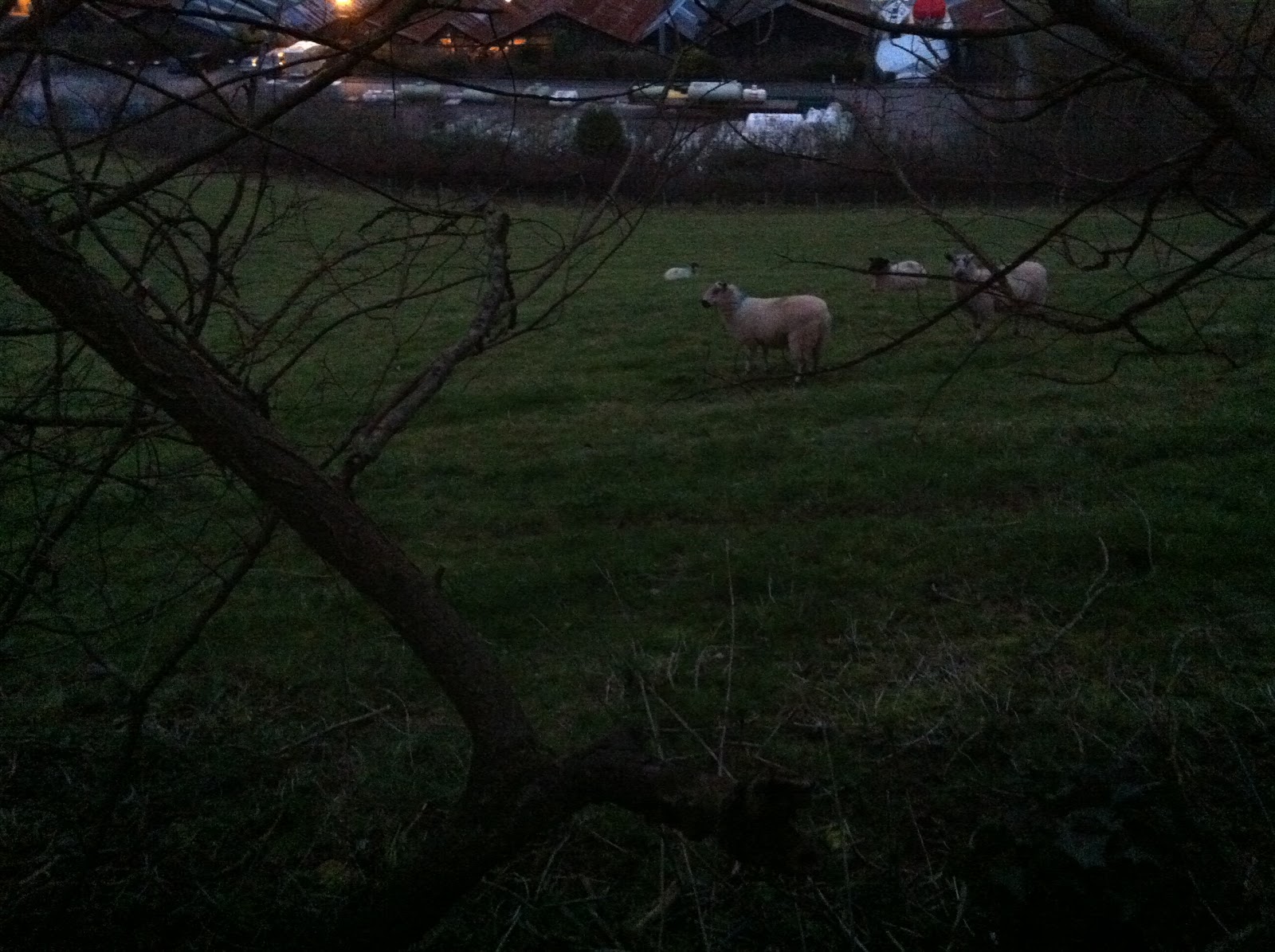
At least the sheep were able to get some rest
I woke them with my camera
On a late afternoon stroll
Perhaps they, too, had been awakened
Too early
And were catching up…

Do we ever really catch up?
I had a friend once who became enraged at the idea
He had read somewhere that lost sleep is truly lost
We never get it back.
I’m not sure why this was so important to him
But, personally, I sometimes really want my sleep back.

On the other hand,
Do we ever really wake up?


Tuesday, 7 February 2012

The Year of Endings and …


Here we are in February already! We are well into the year that some have predicted will involve the end of the world!

I recently saw a comic strip showing the guy who created the Mayan calendar responding to a companion by saying something like, I just ran out of space…

We seem to have an amazing ability to orient to fear. Perhaps the world is ending this year, but what if he really did just run out of room on the rock and we have thousands more years coming? Or what if we are run over by a car tomorrow, and we miss the whole ordeal, if there is one…

We can always find something to be afraid of or worried about. Sometimes that is easier than other times.

What if the meaning of the end of the world was really the end of the world as we know it? Or the end of our perceptual habits as we know them? What if the stars or the elements, or whatever it is that influences us, were particularly aligned at this time to facilitate a shift in perception?

Living From The Heart
Back in the 80s, I found some intuitive teachings coming through me. They instructed us about orienting to love rather than fear. I called my work at that time, Living From the Heart. This is still important to me. What can be more of a priority than love?

Our cultural tendency in the modern western world is to make fear the utmost priority. Countries create armies and security systems based on fear of attack. Lovers (and others) act out relational strategies based on fear of rejection. Education focuses on learning facts from the past out of fear of reliving it. Who teaches us to live from our hearts, in love?

Research in the field of Pre- and Perinatal Psychology demonstrates the essential nature of love in our development. Babies who are not held lovingly do not flourish. They may even die, like infants in over-populated orphanages.

As a teenager I volunteered at a New York state institution for the retarded called Letchworth Village. Usually, a group of us from my school were in the activity room with the high functioning adults. One day when we arrived, the doors to the activity room were locked. We were told that the woman in charge was home sick. We were asked to spend some time with the babies, and were ushered into a room filled with wall-to-wall cribs. We were asked to choose a baby and play.

The scene was shocking. I didn’t know where to begin. The babies were rocking, smashing their little heads into the bars of the cribs, or lying motionless. We were their only stimulation, their only human contact, except for when they were fed or changed.

I found myself finally drawn to a little girl who sat rocking herself. I tried to find ways to reach her. I now know it was much too late for a stranger to have any hope of touching a child so wounded in one short visit. I was particularly ill-equipped because of my own history having left me being quite dissociated from my body.

The little girl I tried to be with was well locked away within her fortress. Her walls were up. Her gates were shut. I now understand that a child with so little human contact and no love lacks the human reflection necessary for developing and organizing her nervous system. Many children deprived of maternal contact when little develop sensory integration problems. They have missed the reference point they needed as little ones, and that we all need to some extent throughout our lives. Love. Without love, they cannot organize the sensory input coming at them. They become easily overwhelmed. Often, they shut down in reaction.

Fear and Isolation
If love is so important, how do we become such fear-oriented beings? Actually, I would argue that it is not our beings that orient to fear; it is the self structure built on top of our being, to protect it.

Within the orientation of fear, we focus on fear. We are on constant alert for danger. Hyper-vigilance takes over our nervous system. Or we shut down and dissociate, living in denial of our pain or even of the real dangers around us. In this state, we are not just protected from pain; we also cannot sense or perceive love.

Fear is an isolative state. We divide our minds, our bodies, our experiences into separate containers, as if to avoid contamination. Modern education is a good example of this. Classes in maths are often taught in isolation without reference to what is being taught in science or social studies or language arts. Children take in unrelated information, without reference to context or relationship. We live that way. Our houses separate neighbors from each other, each family being in isolation. Nations make it difficult to cross their borders, reducing the degree of familiarity we have with each other.

Electronics is to some extent reversing this isolative tendency through the internet, mobile phones, etc., while reinforcing it in other ways. Many young people these days spend more time texting their friends than actually being in the same room as them. The social nervous system, including our faces, senses, and abilities to communicate and cooperate, is relegated to the background, while the electronics we communicate with speed us up. We are stimulated into a persistent fight-flight mode until we collapse or are overwhelmed into dissociation, shock or sleep. Our bodies are tense or uninhabited. Our minds follow suit.

Love Is Now 
If we are not present in our bodies or in each moment, we have reason for fear. Love, on the other hand, is about presence in each moment. Fear is generally about what could happen in the future based on experience from the past. Love is about this moment.

If I spend my time fearing that I will lose those I love, I will miss out on being together with them, sharing the love. The run of deaths I wrote about in my last blog entry has underlined this for me. I can easily be drawn into grieving the loss of my mother, even while she is still here to be with. Each time I pull myself back to the love I know, that is always there under or beyond the fear, I find my mother again in my heart and appreciate that I can still speak to her on the phone.


Love and appreciation are closely linked. Gratitude is in the same family. Research from the Heartmaths Institute (www.heartmaths.org) shows how our heart function is affected by simple moments of appreciation, gratitude or caring vs. anger or complaints.

Gratitude is always available. Focusing on fear and on what we would rather avoid is simply habit. It is not that life is all fun and pleasant, but there is always something to appreciate or feel grateful for. All we need to do is look. I can complain that my mother is ill in hospital so soon after having lost my father, and that it is all too much too soon, or I can appreciate that the hospital staff are taking good care of her, that she is safe, that she is healthier than she was a few weeks ago.

When we shift our orientation from fear to love, our perception also shifts. Cell biologist Bruce Lipton presents a wonderful slide show demonstration of this. He uses red and green filters for his slides. Depending on which the audience focuses on, different messages and images appear. We can see through the lenses of fear or of love, each producing different perceptions.

So, what is 2012 about for you? What does the end of the world actually mean? Perhaps, it means an end to living in fear. Perhaps, it offers a deepening into living in love.

We die in small ways every moment. Skin cells are rubbed away. Thoughts vanish. Our bodies change constantly, meaning that old skins are shed and a new self can emerge. If we keep reverting to our old way of being, we miss the chance to start anew.

Every moment offers the end of the world. Every moment offers a new beginning. What is your choice? Is it time to die? Is it time to be born?

What if we look at this moment, this 2012 moment, as a birthday. My old age has died. I now live in a new one. Happy Birthday everyone! Welcome to this moment.